/ Sweet Summer Weeks
9 Jul 2025 / 23 Aug 2025
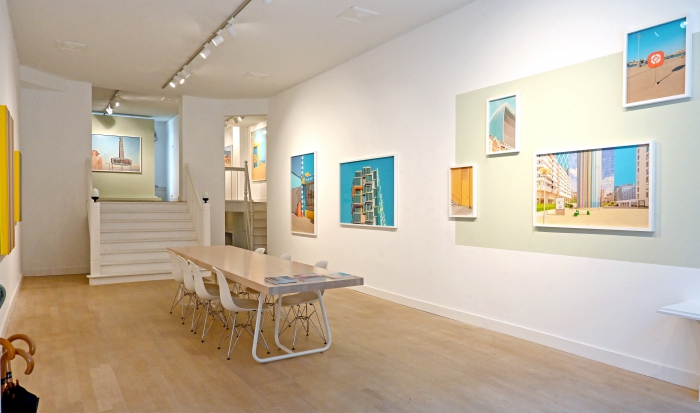
For the remaining summer months, Project 2.0 / Gallery will be host to Sweet Summer Weeks, an ongoing group expo featuring some of the artists represented by the gallery.
In July, we will exhibit works by Kourtney Roy, Ben Thomas, Frank Fischer.
In August, works of Laurien Renckens will be added, culminating by the end of the month in the premiere of her latest work from her Birds of Paradise series. These works will be shown alongside works by Thomas Klein Horsman and Sebastiaan Knot.
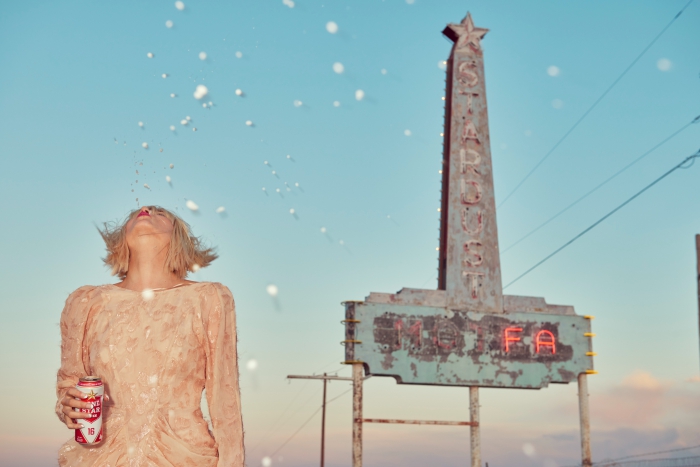
Kourtney Roy:
Kourtney Roy's work is bound up in an ambiguous and cinematic image-making that borders the real and the fantastic. Her approach to photography provokes contemplation and reconfiguration of common place subjects via playful revelation of the bizarre and the uncanny.
She is fascinated with exploring the boundaries of liminal spaces; whether spatial, temporal or psychological. By using herself as the principal subject in her work, the artist creates a compelling, intimate universe inhabited by a multitude of diverse characters that explore these enigmatic themes.
Roy (b.1981) was born in the wilderness of Northern Ontario, Canada. She holds a degree in media studies specializing in photography from the Emily Carr University of Art and Design in Vancouver, Canada. Roy is currently based in Paris, France, where she has been exhibiting her work nationally and internationally for over 10 years at such events and venues as Le Bal, Paris, the Musée Elyséé, Lausanne, The Head On Photo Festival in Sydney and the Moscow International Photo Biennale.
She has been the recipient of numerous awards and grants, including the Prix Picto (2007), Emily Award (2012), Carte Blanche PMU (2013), The Prix Elysée Nomination (2014) and The Canadian Council for the Arts artist grant (2015). Several books have been published on her work, including Ils pensent déjà que je suis folle (Editions Filigranes, 2014), Northern Noir (Editions La Pionnière, 2016), and California (Editions Louis Vuitton, 2016).
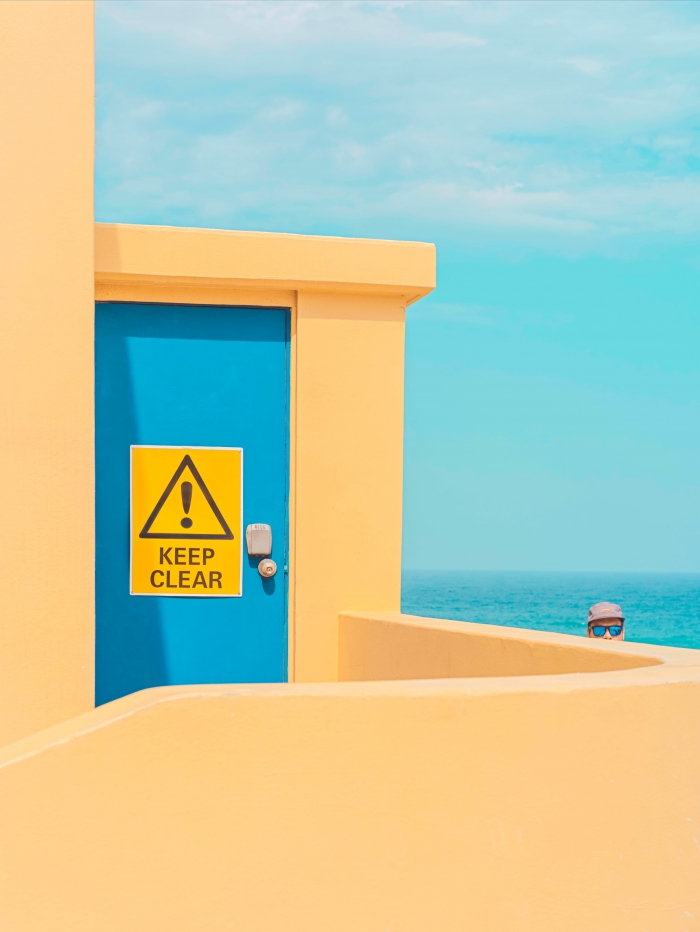
Ben Thomas:
Australian-born artist, Ben Thomas, began working with the moving image in his younger years which sparked his initial interest in the visual arts, but it wasn’t until his mid-twenties, when he moved to Melbourne, that he began to pursue photography. Not knowing the city well, Ben saw photography as a tool to discover and document his new home.
It was this process of documentation as well as his pure fascination with his new surroundings that sparked his passion for photography. The objective in his photographic work is to create pieces that reflect a strong and individual visual aesthetic along with a revealing narrative. For Ben, the most important factor in moving forward has been to relentlessly follow his own vision and to execute that plan without compromise. Describing his photographic style as hyperreality, he creates works that challenge the boundaries of how a photograph is constructed and perceived. Ben poses to challenge the perceptions not only of what photography is, but how the built environment impacts our daily lives. Through this body of work, Ben aims to provide a way for people to consider the relationships that they form with their surroundings and how their environment affects them.
Ben is a Hasselblad Master and has recently worked with/been featured by; Hasselblad, Apple, McLaren Formula 1, Pantone, Wired, The New Yorker Magazine, Sony, Singapore Airlines, Paradiso Art Hotel Ibiza, Penguin Books and Chronicle Books.
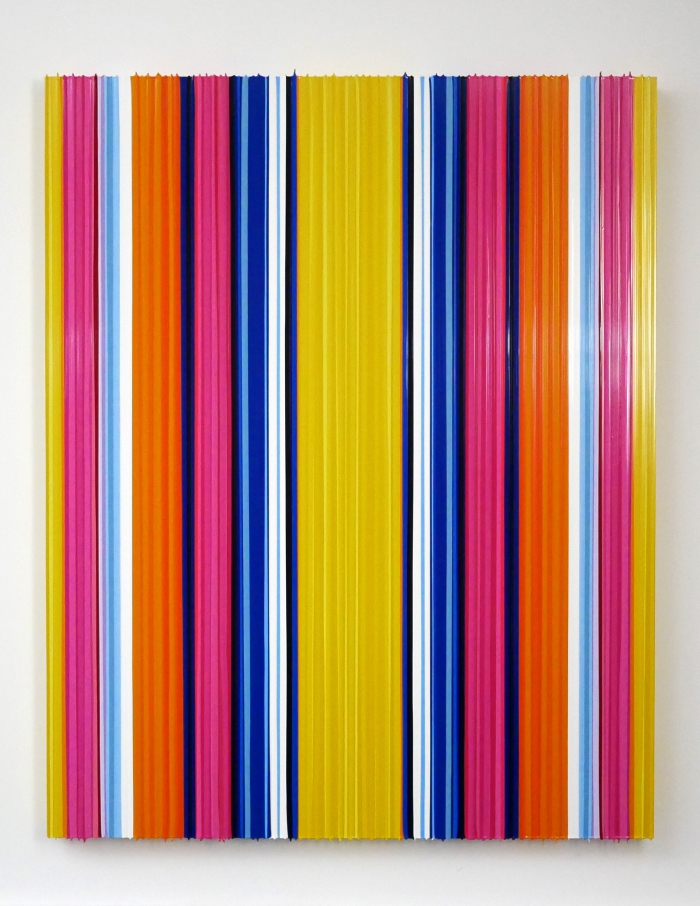
Frank Fischer:
Frank Fischer is an artist who was born in Zurich, Switzerland, and now lives and works in The Hague, Holland. Fischer makes ultra-glossy linear artworks on an aluminium surface. The artworks are inspired by real masterpieces by world famous artists.
He uses the image of such a masterpiece to edit it on the computer and to stretch the image. What remains of the image is a kind of bar code where only the colour of the existing artwork can be recognised. Frank Fischer uses this barcode to create his own artwork by dripping down glossy paint, drop by drop, colour after colour.
This process is incredibly precise and time consuming, especially since the end of the top and bottom need much time to dry. When they are dried the ends look like stalactites of colour.